
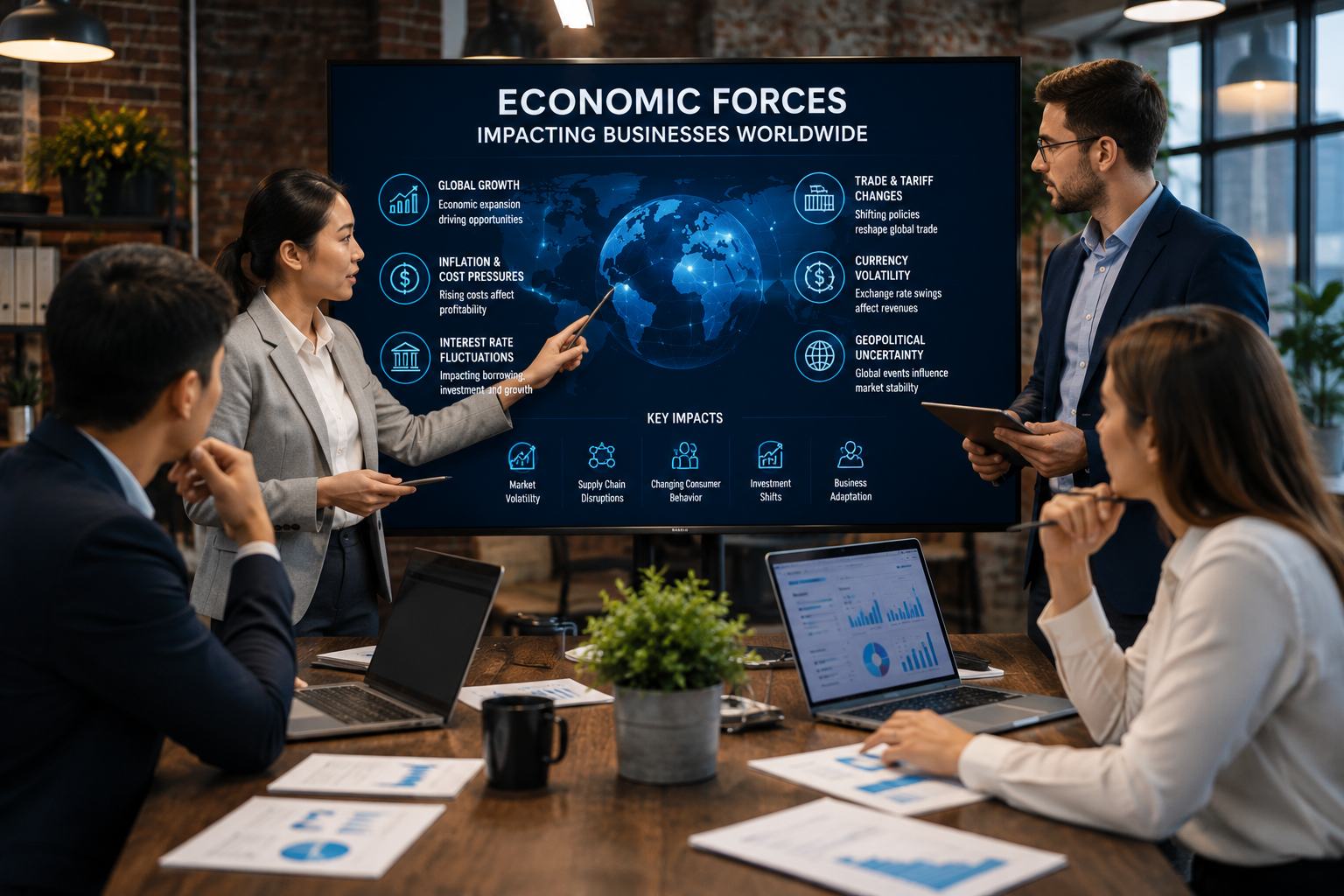
Learn how the Global Economy influences businesses through inflation, trade, interest rates, technology, and changing consumer demand.
Economic Forces Impacting Businesses Worldwide
The Global Economy plays a critical role in shaping business performance across every industry. Economic conditions influence consumer spending, investment decisions, operating costs, and international trade. As markets become increasingly interconnected, businesses must monitor global economic developments to remain competitive and respond effectively to changing conditions.
Understanding the forces that drive the global economy allows organizations to identify opportunities, manage risks, and build strategies for sustainable growth.
Inflation Increases Business Costs
Inflation affects nearly every aspect of business operations. Rising prices for raw materials, transportation, energy, and wages increase operating expenses and can reduce profit margins.
Businesses that monitor inflation trends can adjust pricing, improve efficiency, and better manage financial planning during periods of rising costs.
Interest Rates Influence Investment
Interest rates set by central banks affect borrowing costs for businesses and consumers. Higher interest rates often reduce business investment and consumer spending, while lower rates encourage expansion and economic activity.
Companies planning to invest in new equipment, facilities, or business growth should closely monitor changes in interest rates.
International Trade Shapes Growth
Global trade allows businesses to access new markets, suppliers, and customers. However, trade policies, tariffs, shipping costs, and geopolitical events can influence the movement of goods and services.
Organizations with diversified supply chains and flexible trade strategies are often better prepared for changes in the Global Economy.
Consumer Spending Drives Demand
Consumer confidence directly affects purchasing behavior. When consumers feel financially secure, they are more likely to spend on products and services. During periods of economic uncertainty, spending often slows as households prioritize essential expenses.
Businesses should monitor consumer trends to forecast demand and adjust marketing and inventory strategies.
Currency Exchange Rates Affect Global Business
Companies involved in international trade are influenced by fluctuations in exchange rates. Changes in currency values impact import costs, export pricing, and overall profitability.
Managing foreign exchange risk is an important part of operating successfully in the global marketplace.
Technology Accelerates Economic Growth
Technology continues to transform the Global Economy by improving productivity, reducing costs, and creating new business opportunities. Artificial intelligence, automation, cloud computing, and digital platforms enable companies to innovate and expand more efficiently.
Businesses that invest in technology are often better positioned to compete in global markets.
Supply Chain Resilience
Recent global disruptions have highlighted the importance of resilient supply chains. Businesses are diversifying suppliers, improving inventory management, and using digital technologies to monitor logistics in real time.
Strong supply chain strategies reduce operational risks and improve business continuity.
Government Policies and Regulations
Tax policies, labor laws, environmental regulations, and economic stimulus programs all influence business operations. Governments also implement policies that affect trade, investment, and industry development.
Businesses that stay informed about policy changes can adapt more quickly and maintain regulatory compliance.
Labor Market Changes
Employment levels, workforce skills, and wage growth influence business productivity and operating costs. Companies are investing in employee development, automation, and flexible work arrangements to address changing labor market conditions.
A skilled workforce remains essential for long-term business success.
Sustainability Influences Investment
Environmental and social responsibility are becoming increasingly important in the Global Economy. Investors, customers, and governments are encouraging businesses to adopt sustainable practices and reduce environmental impact.
Organizations that integrate sustainability into their business strategies often improve their reputation while strengthening long-term resilience.
Preparing for Future Economic Changes
Businesses should regularly analyze economic reports, monitor global market developments, strengthen financial planning, and remain adaptable to changing conditions. Companies that anticipate economic changes rather than simply reacting to them are better prepared for long-term success.
Understanding the Global Economy enables organizations to make informed strategic decisions and seize new opportunities.
Conclusion
The Global Economy influences every aspect of modern business, from consumer demand and investment to technology adoption and international trade. Inflation, interest rates, supply chains, exchange rates, sustainability, and government policies all shape the business environment. Organizations that monitor these economic forces and adapt their strategies accordingly will be better positioned to achieve sustainable growth and remain competitive in an increasingly interconnected world.
FAQs
1. What is the Global Economy?
The Global Economy refers to the interconnected economic activities, trade, investment, and financial systems that link countries and businesses around the world.
2. Why is the Global Economy important for businesses?
It affects customer demand, operating costs, investment opportunities, international trade, and overall business growth.
3. Which economic forces have the greatest impact on businesses?
Inflation, interest rates, consumer spending, exchange rates, trade policies, technology, labor markets, and government regulations are among the most influential factors.
4. How can businesses prepare for changes in the Global Economy?
Businesses should strengthen financial planning, diversify supply chains, invest in technology, monitor market trends, and remain flexible in their strategies.
5. How does the Global Economy influence long-term business success?
It shapes market opportunities, competitive conditions, investment decisions, customer behavior, and operational costs, making it essential for strategic planning and sustainable growth.
