
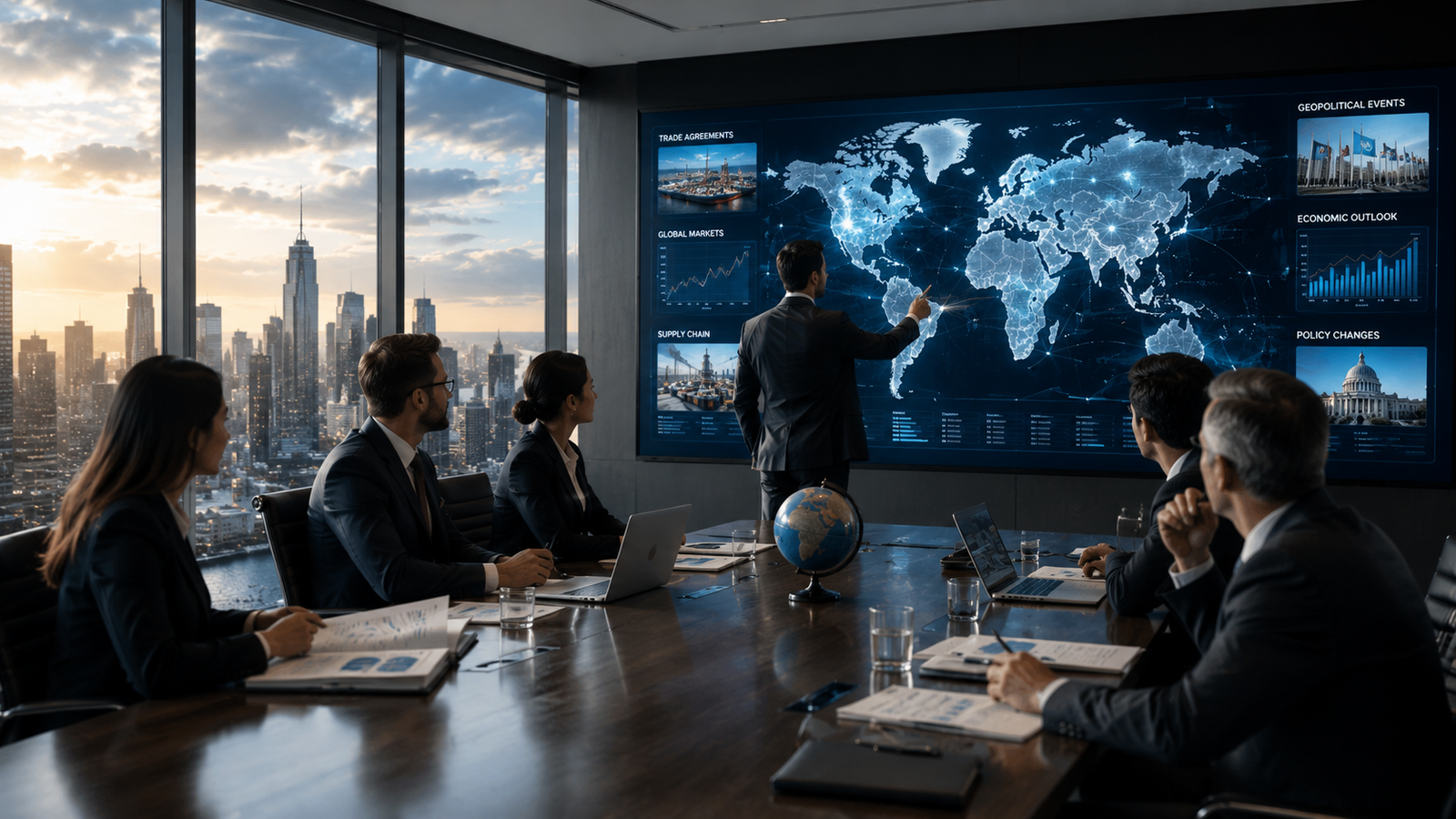
Explore how major global events shape International Business, influencing trade, supply chains, investments, regulations, and business growth.
Key International Events Affecting Businesses
Businesses today operate in an increasingly interconnected world where international events can influence markets, supply chains, investments, and consumer behavior within a matter of days. Economic developments, political changes, technological breakthroughs, and environmental challenges all shape the global business landscape. Understanding how these events affect International Business helps organizations prepare for uncertainty, identify opportunities, and make informed strategic decisions.
Whether a business serves local customers or operates across multiple countries, global events have the potential to impact costs, demand, regulations, and long-term growth.
Global Economic Conditions
Economic performance in major markets influences business activity worldwide. Changes in economic growth, inflation, interest rates, and consumer spending affect demand for products and services across industries.
Businesses involved in International Business should closely monitor global economic trends to adjust investment, pricing, and expansion strategies accordingly.
International Trade Policies
Trade agreements, tariffs, import restrictions, and export regulations directly influence the movement of goods and services between countries.
Changes in international trade policies can create new business opportunities while also increasing costs or limiting market access for certain industries.
Geopolitical Developments
Political instability, diplomatic relations, sanctions, and regional conflicts can significantly affect global markets.
Geopolitical events may disrupt supply chains, influence investor confidence, alter energy prices, and create uncertainty for businesses operating internationally.
Supply Chain Disruptions
Global supply chains remain vulnerable to transportation challenges, natural disasters, labor shortages, and geopolitical tensions.
Organizations increasingly diversify suppliers, improve inventory management, and invest in digital technologies to strengthen supply chain resilience.
Technological Innovation
Rapid technological advancements continue transforming International Business through automation, artificial intelligence, cloud computing, digital payments, and advanced communication platforms.
Businesses that adopt emerging technologies can improve efficiency, enhance customer experiences, and compete more effectively in international markets.
Currency Exchange Rate Fluctuations
Exchange rates influence the cost of imports, export competitiveness, and international investment returns.
Businesses operating across multiple countries should monitor currency movements and develop financial strategies that help manage exchange rate risks.
Environmental and Climate Events
Climate-related events such as extreme weather, resource shortages, and environmental regulations increasingly affect global business operations.
Organizations are investing in sustainable practices and resilient infrastructure to reduce environmental risks while meeting changing regulatory and consumer expectations.
Regulatory and Compliance Changes
Governments regularly introduce new laws affecting taxation, data protection, labor standards, environmental responsibility, and international trade.
Businesses involved in International Business must remain compliant with evolving regulations across multiple jurisdictions to avoid legal and financial risks.
Global Investment Trends
International investment patterns influence market growth, business expansion, mergers, acquisitions, and infrastructure development.
Monitoring foreign investment activity helps organizations identify emerging markets and potential partnership opportunities.
Preparing for Global Business Success
Successful organizations recognize that international events are unavoidable and incorporate global monitoring into their strategic planning.
Businesses that regularly evaluate economic developments, geopolitical risks, technological trends, regulatory changes, and customer behavior are better equipped to respond quickly and maintain long-term competitiveness.
Conclusion
International Business is shaped by a wide range of global events that influence economic conditions, trade, technology, supply chains, regulations, and investment. Organizations that stay informed about international developments can better manage risks, identify new opportunities, and make strategic decisions that support sustainable growth. In an increasingly connected world, understanding global events is essential for building resilient and competitive businesses.
FAQ
1. What is International Business?
International Business refers to commercial activities involving the exchange of goods, services, investments, or operations across national borders.
2. Why do international events affect businesses?
Global events influence trade, supply chains, investment decisions, regulations, consumer demand, and overall economic conditions that impact business performance.
3. Which international events have the greatest business impact?
Major influences include economic developments, trade policy changes, geopolitical events, technological advancements, regulatory updates, and environmental challenges.
4. How can businesses prepare for international uncertainty?
Businesses can strengthen strategic planning, diversify supply chains, monitor global trends, manage financial risks, and invest in digital technologies to improve resilience.
5. Why is monitoring International Business trends important?
Following International Business trends helps organizations anticipate market changes, reduce risks, identify growth opportunities, and remain competitive in the global economy.
